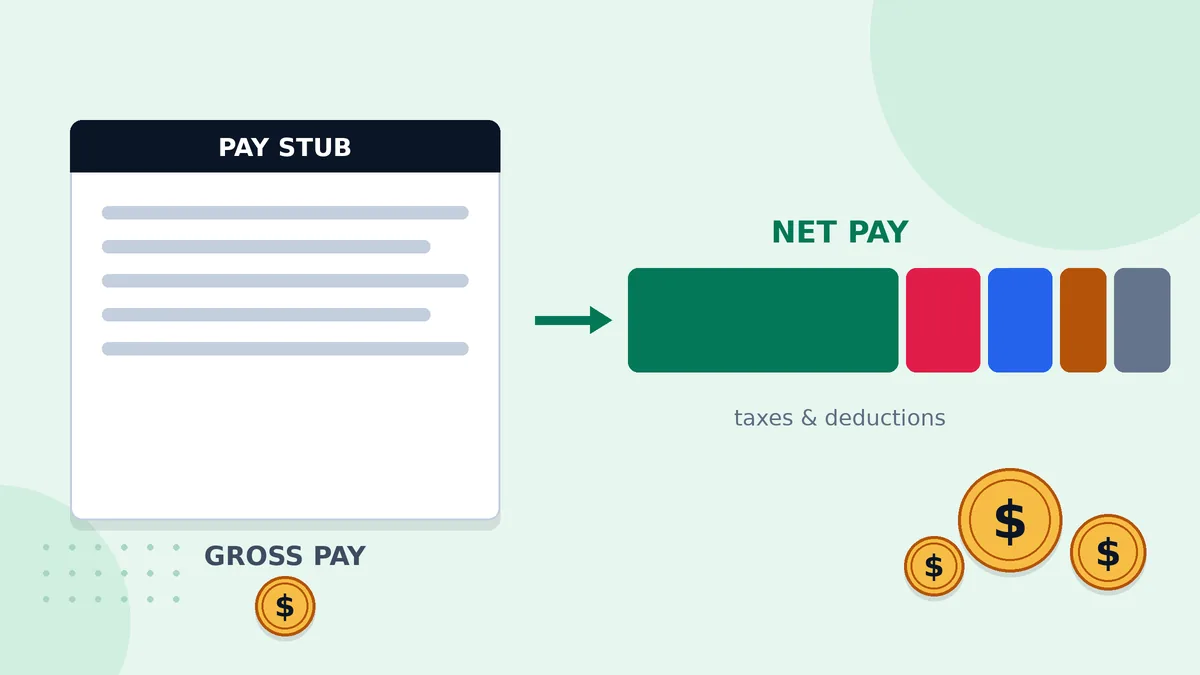
Gross Pay vs Net Pay: Where the Difference Goes
Your offer letter says $58,000. Your bank account sees roughly $45,000. This guide traces the five stops money makes between the two numbers.
Enter your pay, and StubWhiz works out your federal tax, Social Security, Medicare, state tax and take-home pay for every paycheck — using the real 2025 IRS brackets, not a rough guess.
Estimate only — your employer's payroll may differ slightly because of exact W-4 withholding tables, local city taxes, garnishments and benefit timing. Federal figures use 2025 IRS brackets and standard deductions; FICA uses the 2025 Social Security wage base of $176,100. This is an estimate for education only — not tax, financial or legal advice; verify important figures at IRS.gov or with a qualified professional. See how we calculate.
The paycheck calculator above is the flagship — these five companions handle the questions workers ask next: overtime, bonuses, raises and converting between hourly and salary.
Fill in the hourly side or type a salary — the table updates either way. Assumes paid weeks only; unpaid time off lowers the real figure.
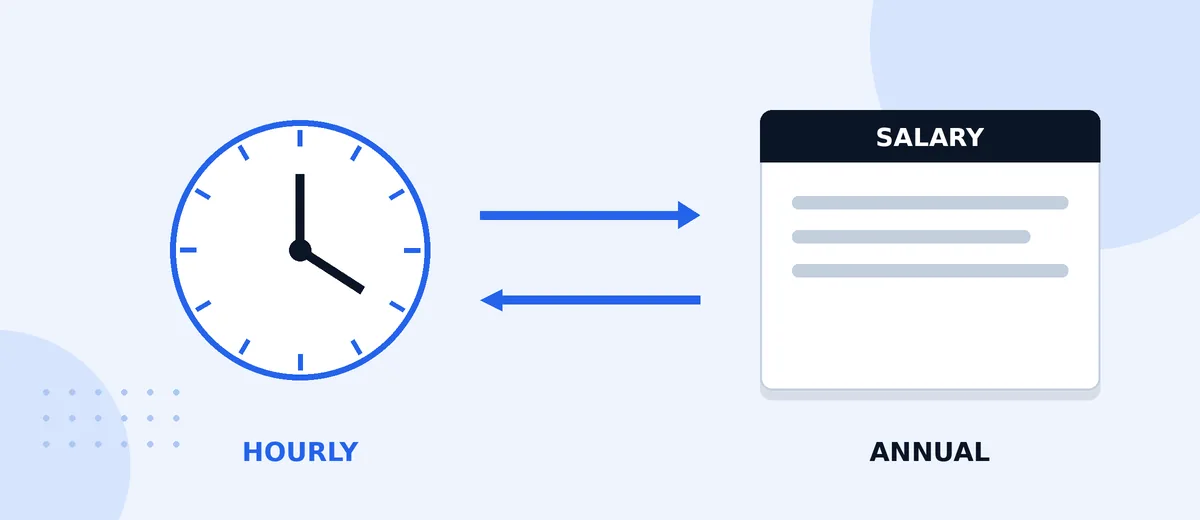
What it calculates. The same pay, expressed every way employers and workers actually use it: hourly, daily (8 hours), weekly, biweekly, monthly and annual. It converts in both directions — wage to salary, or salary back to the hourly rate it really represents.
Annual pay = hourly rate × hours per week × paid weeks per year. Every other figure is that annual total divided down (weekly = ÷ weeks, monthly = ÷ 12). Going the other way, hourly rate = annual salary ÷ (hours × weeks). The one input people get wrong is "weeks": 52 assumes every week is paid, including holidays and vacation. If you take 3 weeks of unpaid leave, your real year is 49 weeks — enter 49 and the annual figure drops to the truth.
Related guide: Biweekly vs Semi-Monthly: Same Salary, Different Life →
Disclaimer: results are estimates for education only and are not tax, financial or legal advice. Figures use tax year 2025 data from IRS.gov; verify important numbers with the IRS or a qualified professional.
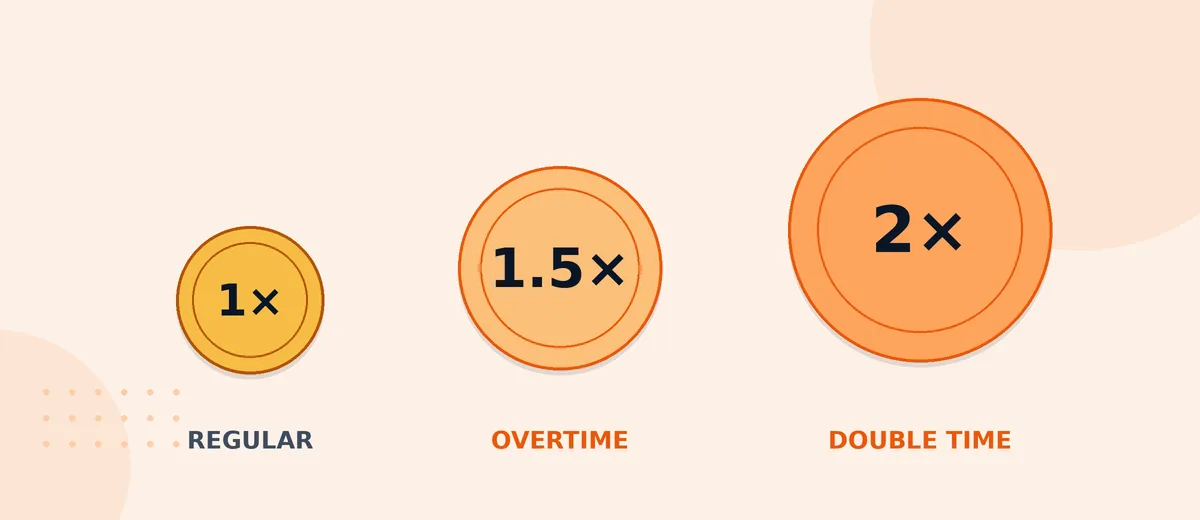
What it calculates. Your gross pay for a week that includes overtime: the regular-hours pay, the overtime hours at 1.5× (time and a half) or 2× (double time), the week's total, and — the number most people never check — the premium, meaning the extra half (or whole) rate that overtime actually added.
Under the federal Fair Labor Standards Act (FLSA), non-exempt employees earn at least 1.5× their regular rate for hours beyond 40 in one workweek. The tool splits your hours at the threshold you choose: hours up to the threshold × your rate, plus hours beyond it × rate × multiplier. Some states add daily rules — California, for example, pays overtime after 8 hours in a single day and double time after 12 — so the tool offers a daily mode that assumes a 5-day week. One subtlety the law insists on: the "regular rate" must include most non-discretionary bonuses and shift differentials, not just base pay, so a stub that calculates overtime on base pay alone may be underpaying you.
Related guide: Overtime Pay: Your Rights Under Federal Law →
Disclaimer: results are estimates for education only and are not tax, financial or legal advice. Employment-law summaries reflect the federal FLSA and cited state rules as of tax year 2025; verify your situation with your state labor agency or a qualified professional.

What it calculates. What a bonus check actually deposits: the bonus minus federal withholding, Social Security, Medicare and an estimated state tax — with both IRS withholding methods shown, because which one your employer uses changes the size of the check (though never your final tax bill).
The IRS treats bonuses as "supplemental wages". Paid as a separate check, federal withholding is a flat 22% (37% on the part of supplemental wages above $1 million in a year). Paid together with regular wages (the aggregate method), payroll withholds as if the combined amount were your normal pay — the tool approximates that with the 2025 single-filer brackets. FICA always applies: Social Security only until your year-to-date wages reach the $176,100 cap (which is why the tool asks what you have already earned), plus Medicare at 1.45% and the 0.9% high-earner surtax where it applies.
Related guide: Why Your Bonus Check Looked So Small →
Disclaimer: results are estimates for education only and are not tax, financial or legal advice. Withholding rules and brackets are tax year 2025 figures from IRS.gov; verify with the IRS or a qualified professional.
Type a percentage or the new salary — whichever you fill in last is the one used.
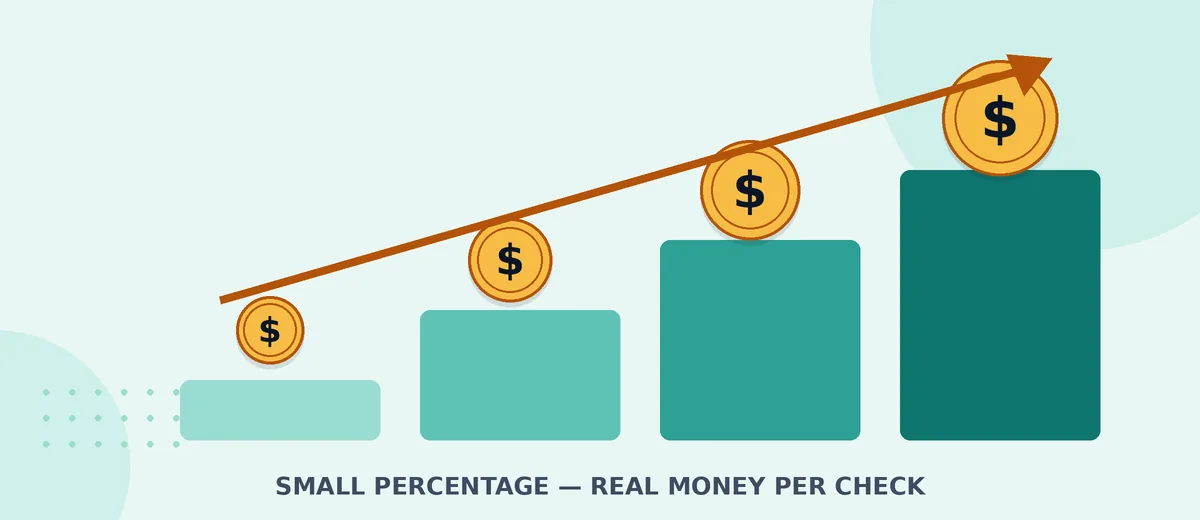
What it calculates. A raise translated from a percentage — a number designed to sound small — into the money units a budget actually runs on: extra pay per year, per month and per paycheck, alongside your new salary and new per-check gross.
New salary = current salary × (1 + raise %). The extra per paycheck is the annual increase divided by your number of pay periods (26 biweekly, 52 weekly, 24 semi-monthly, 12 monthly). Entered the other way — a new salary typed directly — the tool works backwards to the percentage, which is the honest way to evaluate an offer letter: a "$3,000 raise" on $55,000 is 5.45%, while the same $3,000 on $90,000 is 3.33%.
Related guide: Gross Pay vs Net Pay: Where the Difference Goes →
Disclaimer: results are estimates for education only and are not tax, financial or legal advice. Verify figures that matter with your employer or a qualified professional.
| # | Payday | Gross |
|---|
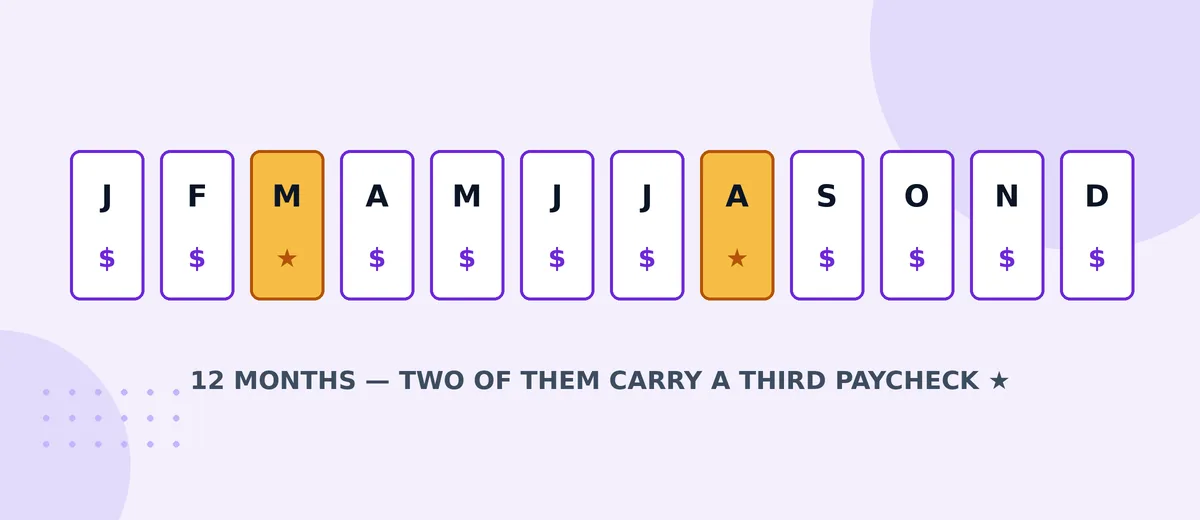
What it calculates. Your actual calendar of paydays: starting from your first payday of the year, it lists the next twelve weekly or biweekly paydays with the gross amount of each check, and flags the months that contain an extra check — the budgeting event biweekly workers get twice a year.
Gross per check = annual salary ÷ pay periods (26 biweekly, 52 weekly). Paydays are then stepped forward 7 or 14 days at a time from the date you enter. A biweekly schedule produces 26 checks across 12 months, so exactly two months contain three paydays — the tool counts the full year and marks those months with a ★. Which months they are depends entirely on your first payday, which is why two coworkers on the same schedule can have different "extra check" months.
Related guide: Biweekly vs Semi-Monthly: Same Salary, Different Life →
Disclaimer: results are estimates for education only and are not tax, financial or legal advice. Verify your pay calendar with your employer's payroll department.
Every line on a real pay stub, decoded. The numbers below are a fully worked example for a biweekly worker earning $28/hour in Texas, in a period with 4 hours of overtime. This is his 22nd paycheck of 2025, and every figure reconciles: each year-to-date total is exactly the per-check amount × 22, and the federal line is the one our own calculator's published formula produces for this worker.
| Jordan M. Alvarez — Warehouse Associate | Emp #4471 |
| Type | Hours | Rate | This period | Year to date |
|---|---|---|---|---|
| Regular | 80.00 | $28.00 | $2,240.00 | $49,280.00 |
| Overtime (1.5×) | 4.00 | $42.00 | $168.00 | $3,696.00 |
| Gross pay | $2,408.00 | $52,976.00 |
| Federal income tax | $190.57 | $4,192.54 |
| Social Security (6.2%) | $146.43 | $3,221.46 |
| Medicare (1.45%) | $34.25 | $753.50 |
| State income tax (TX) | $0.00 | $0.00 |
| 401(k) — 5% pre-tax | $120.40 | $2,648.80 |
| Health insurance premium | $46.15 | $1,015.30 |
| NET PAY — deposited to checking ••3814 | $1,870.20 |
Every hour and rate that built this check. Gross pay is your pay before anything is taken out — always check hours and the overtime rate here first; most payroll mistakes live on this block.
Federal income tax is estimated by your employer from your W-4 and the IRS tables — it is a prepayment, settled on your tax return. Social Security (6.2%, on wages up to $176,100 in 2025) and Medicare (1.45%, no cap) together are called FICA.
Retirement contributions and insurance premiums. Pre-tax deductions (like a traditional 401(k)) are taken out before income tax — which is why they lower your taxable pay. Post-tax items, like a Roth 401(k) or a garnishment, come out after tax.
Gross minus all taxes and deductions = the amount that actually reaches your account. If this number ever surprises you, walk the three blocks above it in order — the answer is always in one of them.
The running totals since January 1. Your YTD gross and federal withholding should match boxes 1 and 2 of the W-2 you receive in January — if they don't, ask payroll before you file.
No black boxes. This is the exact maths behind every number on this page, and the official figures it is built from.
Sources: IRS Revenue Procedure 2024-40 (2025 brackets & standard deductions), IRS Publication 15-T (withholding), Social Security Administration 2025 wage base announcement. Figures reviewed against the official publications.
| Rate | Single | Married filing jointly |
|---|---|---|
| 10% | $0 – $11,925 | $0 – $23,850 |
| 12% | $11,925 – $48,475 | $23,850 – $96,950 |
| 22% | $48,475 – $103,350 | $96,950 – $206,700 |
| 24% | $103,350 – $197,300 | $206,700 – $394,600 |
| 32% | $197,300 – $250,525 | $394,600 – $501,050 |
| 35% | $250,525 – $626,350 | $501,050 – $751,600 |
| 37% | Over $626,350 | Over $751,600 |
| 2025 standard deduction | Amount |
|---|---|
| Single | $15,000 |
| Married filing jointly | $30,000 |
| Head of household | $22,500 |
Marginal ≠ effective: take the single worker on $58,240 in our calculator (5% 401(k), $1,200 of other pre-tax deductions). Their taxable income is $39,128, so their top slice is taxed at just 12% — the 22% bracket never comes into it — and their effective federal rate is about 7.7%. Add FICA and the total effective tax rate is 15.1%, which is the figure the calculator shows. The marginal rate is the one that applies to your next dollar; the effective rate is what you actually paid overall.
So the flagship calculator can be checked end to end, here is its default case worked by hand: $28/hour, 40 hours a week, biweekly, single filer, Texas, 5% 401(k), $1,200/year of other pre-tax deductions.
Related reading: How to Read Your Pay Stub · What Is FICA? · How Federal Withholding Works
What this calculator cannot see: your exact W-4 elections beyond filing status, local city/county taxes, wage garnishments, post-tax deductions, employer-specific benefit timing, and mid-year changes. Where any of those apply, expect a real stub to differ — the line-by-line comparison in the Pay Stub Guide shows how to find where.
Original, human-written explainers — the reading that turns a confusing pay stub into a document you fully control. Tap any guide to read it in full.
Your offer letter says $58,000. Your bank account sees roughly $45,000. This guide traces the five stops money makes between the two numbers.
Your employer doesn't guess your tax bill. They run a formula — and your W-4 is the instruction sheet. Here's how to read and fix it.
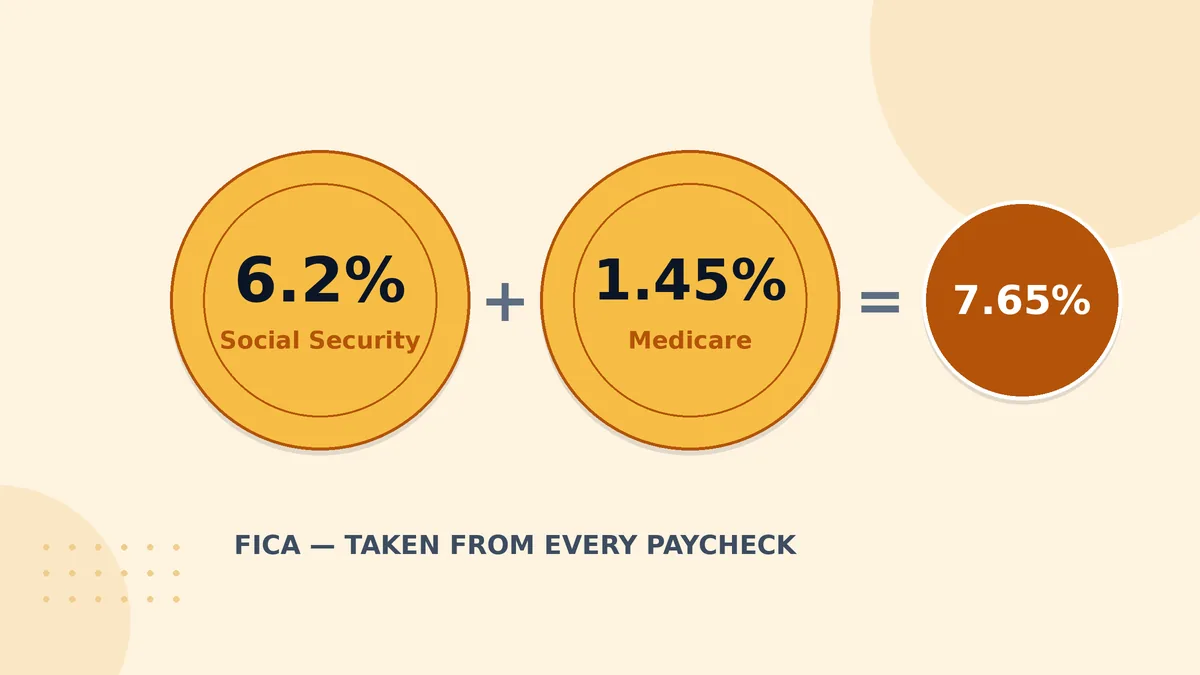
Social Security and Medicare together take 7.65% of almost every paycheck in America. What you get for it, and when part of it stops.
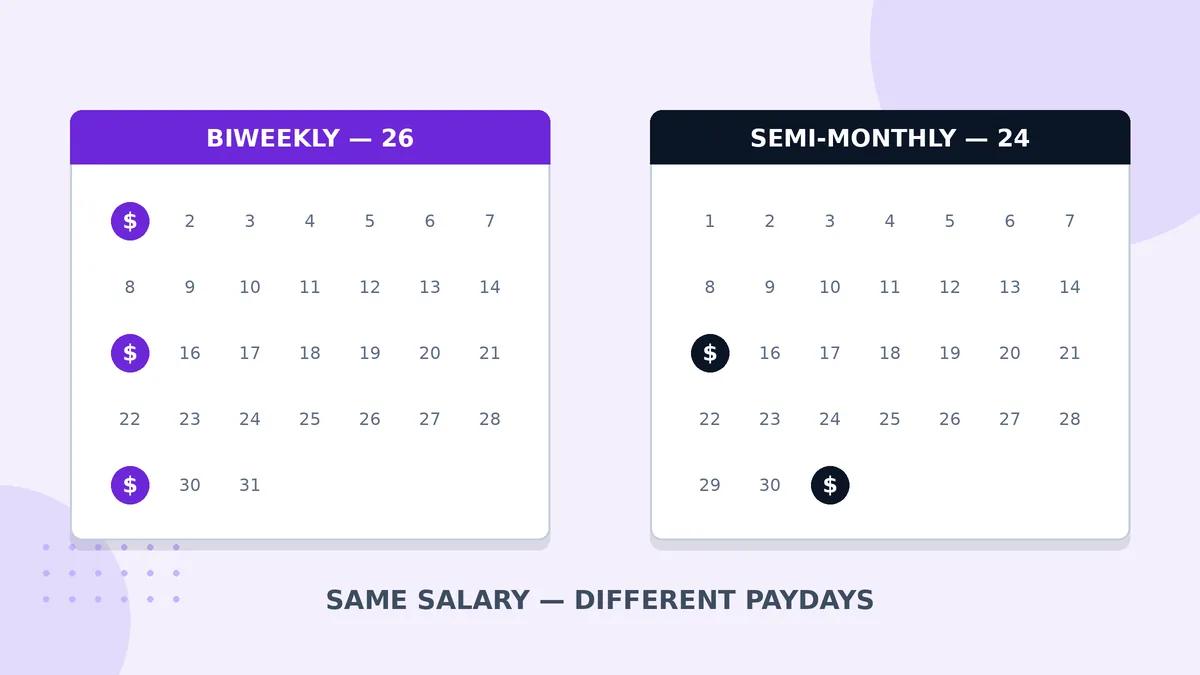
26 checks or 24? The difference changes your monthly budget, creates two "extra paycheck" months a year, and confuses almost everyone once.

A $5,000 bonus arrives as $3,600 and it feels like a 28% tax. It isn't — withholding and tax are two different things. Here's the full story.
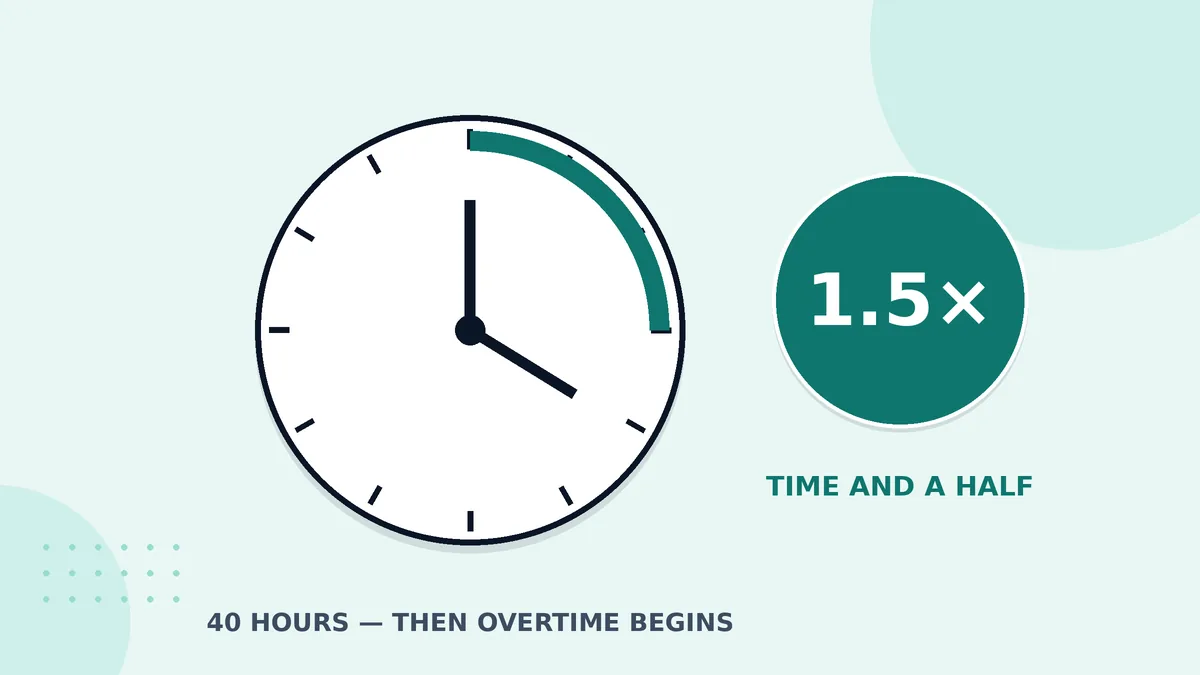
Time-and-a-half is not a perk — for most hourly workers it is a federal legal entitlement. Who qualifies, and how to check the maths.
Every guide is written by the StubWhiz Pay Desk and reviewed against its cited IRS or SSA source before publication. Guides are general education, not tax, financial or legal advice; figures are tax year 2025 unless a guide states otherwise — verify decisions that matter at IRS.gov or with a qualified professional.
State tax changes everything about a paycheck. Pick your state and the main calculator loads with it selected. States marked 0% have no state income tax on wages.
Full state list, including every rate used, is inside the calculator's state menu. Local taxes (for example New York City's own income tax) are not included in these estimates.
Fifty-one near-identical state pages that swap one tax table and nothing else are the classic thin-content pattern search engines reject. StubWhiz does the opposite: one rich calculator that handles every state properly, plus genuinely state-specific notes below for the states where a single rate hides something important — a local tax, a payroll premium, or a daily overtime rule. Each note links to that state's own revenue authority.
California's brackets climb steeply, and employees also pay 1.2% State Disability Insurance on all wages (no cap since 2024) — a line our single-rate state estimate does not include, so real CA checks land slightly below the estimate. California also requires daily overtime after 8 hours in a day; the Overtime tool has a daily mode for exactly this.
California Franchise Tax Board →New York State's brackets run from 4% to 10.9%, and New York City residents pay a separate city income tax (roughly 3.08%–3.88%) on top — the single biggest reason a real NYC paycheck is smaller than any state-only estimate, including ours. Yonkers adds a smaller surcharge of its own.
NYS Department of Taxation & Finance →Texas has no personal income tax at all, so a Texas paycheck carries only federal tax and FICA — which is why our worked pay-stub example is set here: every line on it can be checked against federal rules alone. The state funds itself mainly through sales and property taxes instead.
Texas Comptroller →Oregon pairs some of the highest state income-tax rates in the country with no sales tax at all. Workers in the Portland metro area can also owe local taxes (such as the Metro supportive-housing tax) that a state-level estimate cannot capture — check your stub's local lines if you work there.
Oregon Department of Revenue →Washington levies no tax on wage income — but since July 2023 most employees pay a 0.58% WA Cares payroll premium for the state's long-term-care fund, a real deduction that is not an income tax and is not in our state estimate. Washington does tax certain high-value capital gains, which never appear on a wage paycheck.
Washington Department of Revenue →Florida is the most-searched zero-tax state after Texas: no state income tax, no city income taxes, so federal tax and FICA are the whole story on a Florida stub. Employers (not employees) pay Florida's reemployment tax, so it never appears as an employee deduction.
Authority: Florida Department of RevenueDisclaimer: state figures are simplified estimates for education only, using tax year 2025 data; they are not tax, financial or legal advice. Always verify with your state's revenue authority (linked above) or a qualified professional.
StubWhiz started with a simple frustration: pay stubs are written in payroll-department language, and most "calculators" online hide their maths, drown you in ads before showing a number, or quietly use tax tables from three years ago. We built the opposite — every tool free with no sign-up, every formula published, every figure tied to a current IRS or SSA source.
Our editorial rule is strict: a guide is published only when a second person has re-checked every number in it against the official publication it cites. When the IRS issues new brackets each autumn, the calculators and the bracket tables are updated together — never one without the other.
Who writes and reviews StubWhiz — the Pay Desk. Every article and calculator on this site carries one byline: the StubWhiz Pay Desk, our named editorial desk for pay and tax content. The Pay Desk writes in plain English, shows its formula for every number, and re-checks each figure against the primary source — IRS.gov publications for federal figures, SSA announcements for FICA, state revenue authorities for state notes — before anything is published. Corrections sent by readers go to the same desk and are published openly. StubWhiz is an independent educational site: we are not the IRS, not a payroll company, and not affiliated with any government agency or with Google.
| Flagship tool | Paycheck Calculator |
| Companion tools | 5 more calculators |
| Coverage | 50 states + DC |
| Tax year built in | 2025 (federal) |
| Guides library | 6 in-depth guides |
| Cost | Free |
| Data handling | 100% in-browser |
| Written & reviewed by | The StubWhiz Pay Desk |
Spotted an error, or want a calculator we don't have yet? Write to us — reader corrections are how this site stays accurate.
✉ hello@stubwhiz.com